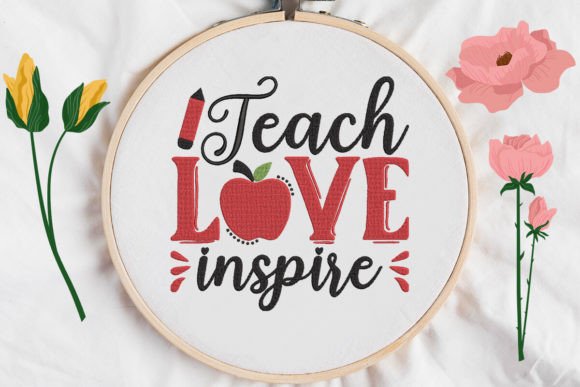
Teach, Love, Inspire: A Craft Fair Seller's Review
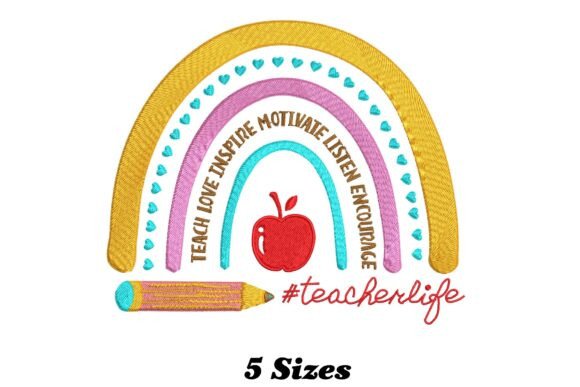
As an experienced embroidery designer preparing for a weekend craft fair, my evaluation of any new machine embroidery design goes far beyond how it looks on a computer screen. I have to consider stitch-out time, fabric compatibility, and most importantly, whether it will stop a customer walking down a crowded aisle. When reviewing the "Teach, Love, Inspire, Teacher" design for upcoming Back To School markets and teacher appreciation events, I am looking at this asset through the lens of profitability and production efficiency. This review breaks down how this specific embroidery file performs in a real-world commercial setting, from booth display to batch production.
First Impressions and Market Positioning
Upon loading the digital embroidery file, the immediate impression of "Teach, Love, Inspire, Teacher" is one of classic, heartfelt sentimentality. It strikes a balance between modern typography and traditional craftsmanship. For a craft fair product, this emotional resonance is critical. Teachers and parents are not just buying thread on fabric; they are buying recognition and gratitude. The design feels versatile enough to bridge the gap between rustic farmhouse aesthetics and clean, contemporary school branding.
From a seller’s perspective, this versatility is a major asset. It does not pigeonhole your inventory into a single niche. While clearly a Back To School staple, the phrasing allows it to remain relevant year-round for retirement gifts, end-of-year celebrations, and mentorship acknowledgments. As an Etsy seller or boutique maker, this extends the shelf life of your design assets well beyond September, providing better return on investment for your digitizing or licensing fees.
Best-Selling Applications for Booth Displays
When curating a table display, you need products that showcase the design's strengths while hiding potential limitations. Based on the structure of "Teach, Love, Inspire, Teacher," here is where I see the highest conversion potential:
- Tote Bag Design: Canvas totes are the premier vessel for this phrase. The flat surface allows for crisp lettering, and the large hoop area accommodates the full phrase without shrinking text to illegibility. A natural canvas tote with dark green or navy thread creates a premium, eco-friendly look that sells instantly at education-focused markets.
- Apron Embroidery: For art teachers, culinary instructors, or science lab educators, an apron is a functional handmade product. Placing this design on the chest pocket area or center bib provides high visibility. Ensure you use a cutaway stabilizer to prevent the denim or twill from distorting under the weight of the text.
- Tea Towel Embroidery: Flour sack towels offer a smooth texture that captures fine details beautifully. This application works best if the design has a lighter stitch density. These make excellent lower-price-point add-ons at a booth, encouraging impulse buys alongside higher-ticket items.
- Embroidered Patch: If the design is compact enough, creating patches allows for bulk pre-production. You can stitch out fifty patches in advance and attach them to caps, pouches, or jackets on-demand at the fair. This maximizes booth efficiency and reduces live production stress.
Production Practicality and Batch Efficiency
A beautiful design is useless if it takes three hours to stitch out or requires constant supervision. When evaluating "Teach, Love, Inspire, Teacher" for commercial embroidery, I assess its repeatability. Text-based designs generally excel here because they lack complex color changes or intricate shading gradients that slow down production.
For batch production, check the stitch density. A design that is too dense will cause puckering on lighter fabrics and increase thread consumption. Conversely, a design that is too sparse may look cheap on textured materials. Ideally, this design should utilize satin stitches for lettering and perhaps a light fill or running stitch for decorative elements. This balance ensures the finished product feels substantial without being bulletproof. As a small shop product, you want a stitch-out time that allows you to price competitively while maintaining healthy margins. If the design runs under 15 minutes on standard tote bags, it is a prime candidate for flash sales or bundle deals.
Critical Technical Considerations and Warnings
Even the most lovely embroidery design has technical boundaries. Before listing "Teach, Love, Inspire, Teacher" as a core offering, you must address these practical constraints:
Legibility at Small Sizes
The four-word phrase requires horizontal space. If you attempt to shrink this design to fit a 4x4 hoop or a small pocket, the lettering may become unreadable. Always verify the minimum recommended size in the file metadata. Never sacrifice clarity for placement; if the customer cannot read "Inspire" from three feet away, the design fails as marketing.
Fabric Texture Compatibility
While this design likely shines on smooth cottons, be cautious with terry cloth or plush fleece. The texture can swallow smaller letters. If applying this to a textured towel or fuzzy blanket, you must use a water-soluble topping to keep the stitches visible. Without it, your "Teach, Love, Inspire, Teacher" message will disappear into the pile.
Stabilizer Selection
Text-heavy designs exert significant pull on fabric. Using the wrong stabilizer is the fastest way to ruin a craft fair product. For stretchy knits or apparel, always use a fusible cutaway. For woven tote bags, a medium-weight tear-away may suffice, but test first. Puckering around the text is a sign of inadequate stabilization, not a digitizing flaw, and customers perceive it as poor quality.
Visual Merchandising and Customer Engagement
How you present "Teach, Love, Inspire, Teacher" determines its perceived value. At a craft fair, visual hierarchy matters. Because this is a sentiment-driven design, it should be displayed at eye level. Use a mannequin or a standing rack rather than laying items flat on a table. Customers connect with the words when they are presented vertically, mimicking how we read signs and posters.
For online sellers, printable mockups are essential, but nothing replaces photography of the actual stitched item. Show the design in context: a tote bag filled with books, an apron hanging in a classroom, or a tea towel draped over a wooden spoon. Lifestyle imagery validates the handmade quality and helps buyers visualize the gift. When photographing, ensure lighting highlights the sheen of the thread. Matte photos flatten the dimensionality of machine embroidery, making it look like a print rather than a tactile textile art.
Designer’s Pre-Production Checklist
Before committing to a full production run for your next market, complete this verification process:
- Test Stitch on Scrap: Never trust the screen view. Stitch the design on the exact fabric and stabilizer combination you intend to sell. Check for registration issues between letters.
- Verify Thread Contrast: Test thread colors against various fabric backgrounds. White text on cream fabric lacks impact. Navy on charcoal is invisible. High contrast drives sales.
- Confirm Hoop Size: Ensure your machine’s maximum stitching area accommodates the design without re-hooping. Multi-position hooping increases error risk during batch runs.
- Review Licensing: Confirm the embroidery file includes commercial rights for finished products. Some licenses restrict digital resale but allow physical goods; others have limits on unit counts. Protect your business by reading the terms.
- Create Physical Samples: Produce at least one flawless sample for every product type you plan to offer. Use these for booth display and listing photos. Do not sell your prototype unless it meets your premium standards.
"Teach, Love, Inspire, Teacher" holds immense potential for embroidery businesses targeting the education sector. Its success lies not just in the sentiment, but in your execution. By respecting the technical requirements of stitch density, choosing appropriate substrates like totes and aprons, and presenting the finished product with professional merchandising, you transform a simple digital file into a best-selling staple for your handmade brand. Always prioritize quality testing over speed, and let the integrity of your craftsmanship honor the message stitched into every piece.