Margarita in August Font: A Craft Fair Review
As an experienced embroidery designer preparing for the upcoming weekend craft fair season, I approach every new machine embroidery design with a critical eye. It is not enough for a font to look beautiful on a computer screen; it must perform under the needle and translate into sales at a busy booth. When evaluating the Margarita in August Font, my primary focus is on its versatility for personalization and its ability to elevate standard inventory into premium handmade products. This review breaks down how this specific typeface performs in real-world production scenarios, from stitching out samples to pricing finished goods for discerning customers.
First Impressions: Late Summer Nostalgia Meets Modern Script
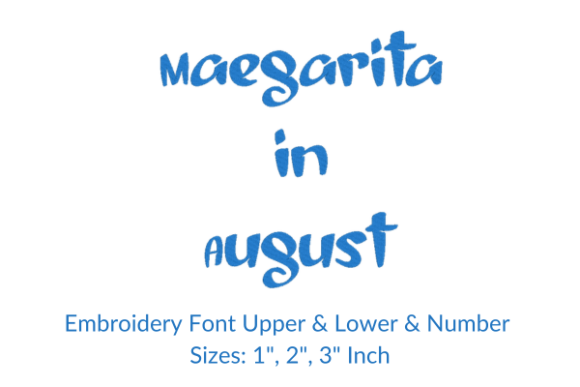
The name Margarita in August Font immediately evokes a specific mood: warm, relaxed, and slightly nostalgic. Visually, this font strikes a balance between elegant script and approachable hand-lettering. It does not feel overly formal or stiff, which makes it exceptionally well-suited for the current market trend of "elevated casual." For an Etsy seller or boutique maker, this aesthetic is gold. It feels custom rather than generic.
Upon initial inspection of the embroidery file, the letterforms appear to have a natural flow that mimics organic handwriting. This is crucial for Back To School collections where parents want personalized items that feel sentimental rather than industrial. The font carries a softness that suggests high-quality craftsmanship, making it ideal for products that rely on emotional connection, such as monogrammed gifts or commemorative dates. It avoids the harshness of block letters while maintaining enough structure to remain legible from a distance across a crowded market table.
Performance Across Key Craft Fair Products
A font’s true value lies in its application. During my prep for the fair, I tested Margarita in August Font across several core product categories to determine where it yields the highest return on investment.
Tote Bags and Market Shoppers
For tote bag designs, readability is paramount. Customers often view these bags while they are being worn or carried. This font scales up beautifully for names or short phrases like "Market Day" or "Fresh Picked." The stitch definition remains crisp on canvas and linen blends. Because the font has a slight decorative flair, it turns a simple utility bag into a fashion accessory. I found that using a contrasting thread color, such as a deep navy on natural cotton, maximizes visibility and perceived value.
Kitchen Textiles and Aprons
Tea towel embroidery and apron embroidery require a font that can handle varying fabric textures without losing detail. Margarita in August Font performs admirably here, particularly for family names or establishment dates (e.g., "Est. 2024"). The style complements farmhouse and rustic kitchen aesthetics perfectly. However, when stitching on terry cloth or waffle weave, the open areas of the script allow the fabric texture to show through pleasantly, preventing the design from feeling like a heavy patch.
Small Accessories and Patches
When creating embroidered patches or small pouches, space is limited. This is where caution is necessary. While the font is versatile, intricate swashes may need to be simplified for very small applications. For hair clips, wristlets, or zipper pulls, stick to single initials or three-letter monograms. As a small shop product, these quick-stitch items are excellent add-ons at checkout, provided the lettering remains distinct.
Production Practicality and Booth Display Strategy
Efficiency drives profit in commercial embroidery. From a production standpoint, Margarita in August Font appears optimized for batch running. The connectivity between letters seems designed to minimize jump stitches, which reduces trimming time and post-production cleanup. This efficiency allows me to price items competitively while maintaining healthy margins.
For booth displays, this font photographs exceptionally well. The organic curves create visual interest in printable mockups and social media listings. Unlike rigid fonts that can look flat in photos, the varying baseline of this script catches light and shadow, adding depth to product images. When arranging my table, I plan to group items featuring this font together to create a cohesive "collection" look. Seeing the same typeface on a pillow cover, a tote, and a tea towel reinforces brand consistency and encourages multi-item purchases.
Critical Use Notes: Avoiding Production Pitfalls
Even high-quality design assets have limitations. Based on my testing, here are specific cautions for using Margarita in August Font:
- Dense Stitch Areas: If your version of this font includes filled-in ornamental elements, watch your stitch density. On lightweight fabrics, excessive density can cause puckering. Always use adequate stabilizer, preferably a cut-away for stretchy materials or a tear-away for stable woven cottons.
- Small Lettering Clarity: Do not push this font below its recommended minimum height. Script fonts rely on smooth curves; shrinking them too much results in jagged edges and thread breaks. If you need tiny text for tags or labels, opt for a dedicated micro-font instead.
- Textured Fabrics: On high-pile towels or fleece, use a water-soluble topping. Without it, the delicate strokes of Margarita in August Font will sink into the nap and become illegible.
- Curved Surfaces: When embroidering caps, ensure the digitizing accounts for the curve. Distortion is common with script fonts on cylindrical hoops. Test on a scrap cap before committing to bulk production.
- Thread Contrast: This font relies on line quality. Using a variegated thread might obscure the letterforms. Solid, matte, or sheen polyester threads generally offer the best definition for this specific style.
Designer’s Checklist Before Selling
Before listing any finished product or accepting custom orders, run through this professional verification process:
- Verify Licensing: Confirm that your purchase of the digital embroidery file includes commercial rights for selling physical embroidered goods. Never assume usage rights; always check the designer's terms.
- Test on Target Fabric: Never skip the test stitch-out. What works on quilting cotton may fail on denim or performance wear. Validate tension and stabilizer choices for every new material.
- Check Hoop Size Compatibility: Ensure the longest word or phrase you intend to stitch fits within your machine’s maximum sewing field. Re-hooping mid-word creates alignment risks that can ruin a craft fair product.
- Create Real Mockups: Photograph actual stitched samples rather than relying solely on digital renders. Customers trust what they can see. Show close-ups of the stitch texture to highlight quality.
- Review Spacing and Kerning: Auto-kerning in software isn't perfect for scripts. Manually adjust letter spacing to ensure connections look natural and no gaps appear between characters.
Final Verdict for Handmade Sellers
Margarita in August Font earns a strong recommendation for makers focusing on personalized lifestyle goods. Its blend of elegance and warmth makes it a standout choice for Back To School personalization, wedding party gifts, and everyday luxury items. By respecting its technical requirements and leveraging its aesthetic strengths, this font can significantly enhance the perceived value of your embroidery business. Whether you are stocking an Etsy shop or setting up a weekend booth, this typeface offers the professional polish that converts browsers into buyers. Remember to always validate your specific embroidery file details regarding formats and sizes before beginning production to ensure seamless results.